Similar Posts
Off to See the Wizard
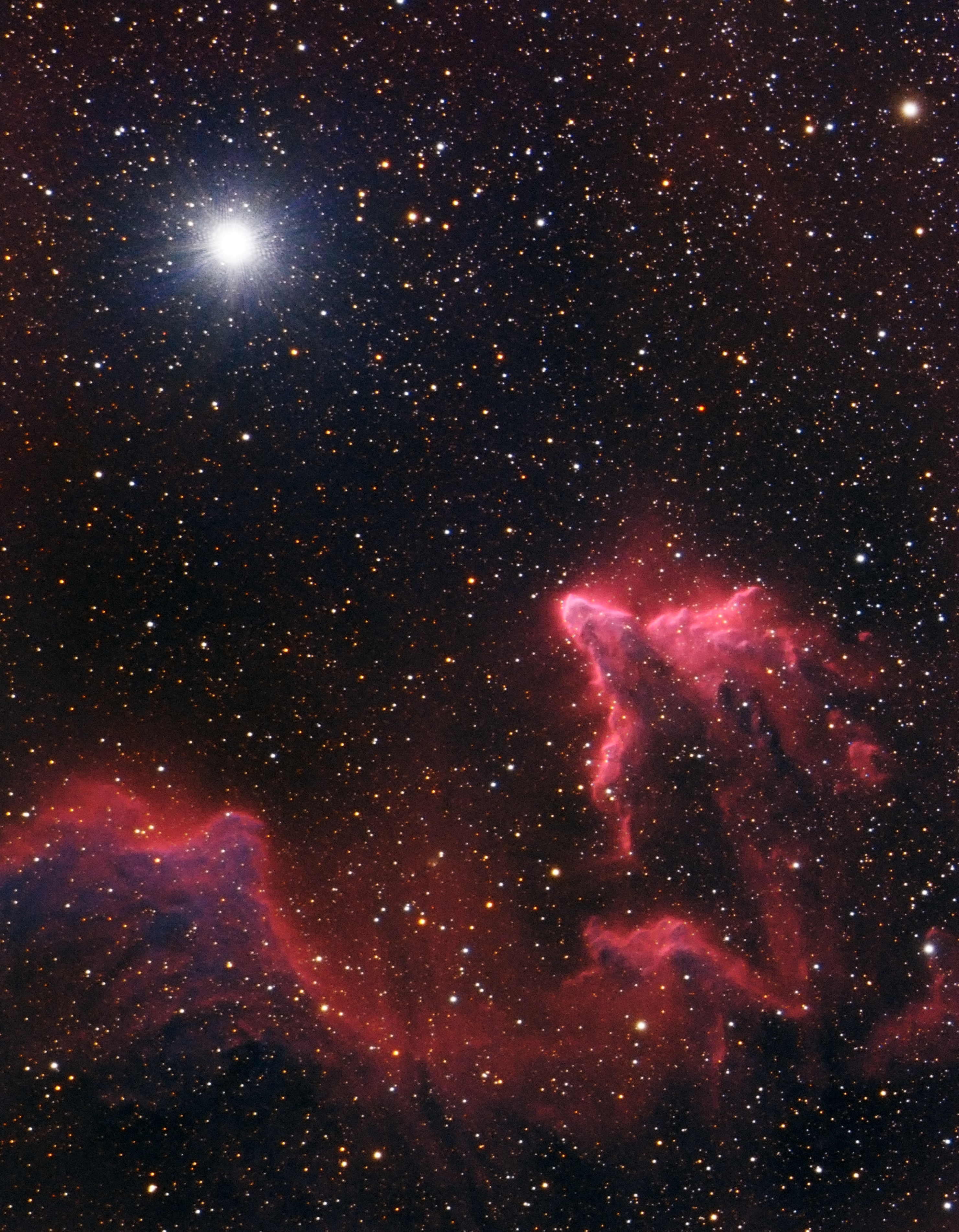
There are a lot of stars in this picture; the gases of the Wizard Nebula (formally SH2-142) are the birthplace of those stars, and more are being created even now. It’s located about 7,200 light-years away, and is extremely dim – it took over 9 hours of exposure time to capture this image. Your ability…
Back to the Bubble Nebula
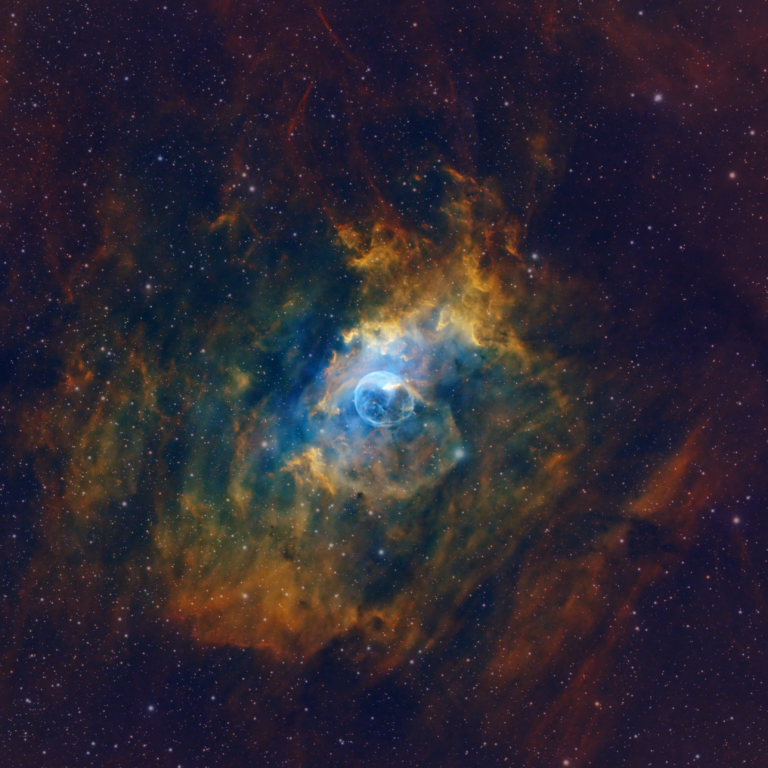
The Bubble Nebula still has a soft spot in my heart… it’s what really got me going with astro-imaging years ago. It’s just such a fascinating, gorgeous object and it really inspired me the first time I saw it. Here’s my deepest exposure of it yet: over 20 hours of exposure time, in the “Hubble…
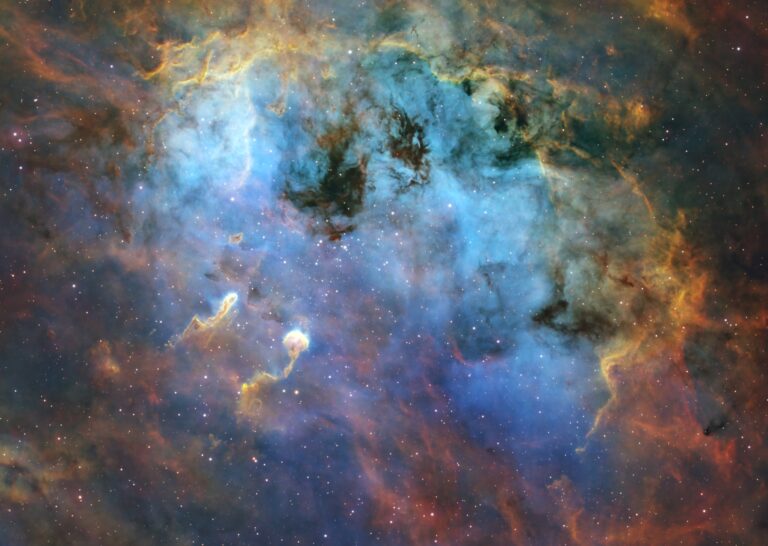
The Tadpoles
Commonly known as the “Tadpoles Nebula” for obvious reasons, this is somehow my first time imaging this one! Shot in narrowband / Hubble palette remotely from Starfront Observatories in Texas. Focusing in on the “Tadpoles” makes for a more interesting image, but here’s the wider field shot it was cropped from, which is also fun…
M17 doesn’t look like a swan to me.
M17 is commonly known as the Swan Nebula or the Omega Nebula. From this angle, I think it looks more like a crab – but “Crab Nebula” was taken! Shot over a hazy summer night, with narrowband filters for the gases of the nebula itself, and RGB natural-color filters for the stars. Presented processed with…
The “Leo Trio” of galaxies
Three nearby galaxies: M65, M66, and NGC 3628. All three are spiral galaxies, viewed from different angles. You can guess which one is called the “Hamburger Galaxy” đŸ™‚
Going Deep with the Horsehead and Flame
The Horsehead and Flame nebulas, although popular, are really difficult to image together. The clouds of Hydrogen look best using narrowband filters, but the blue reflection nebula below the Horsehead only appears in wideband, color filters. Further complicating matters is the bright star Alnitak, one of the stars that makes up Orion’s belt. In narrowband,…