Similar Posts
The Trifid Nebula (M20)
Our new observatory is starting to prove its worth… the Trifid Nebula is an object I’ve always wanted to capture, but in our previous location it was too low in the sky and was always obstructed by trees. Further complicating matters, it is a summertime object, and here in Florida summertime is the worst time…
The Flaming Star Nebula
I shot this object in a few different ways. Here’s how it looks in pure “LRGB” light – how it would appear to the eye in its natural wavelengths, if your eyes could detect color on something so dim! And here’s a narrowband take on this same object. Notice that the structure of its core…
The Medusa Nebula
This is planetary nebula PK205+14.1, but its common name “The Medusa Nebula” rolls off the tongue a little better. About 1500 light-years away within the constellation Gemini, you’re seeing the gas blown off by a small star that ran out of fuel, and blew up into a red giant – later to end its life…
The Moon is Ready for its Close-Up
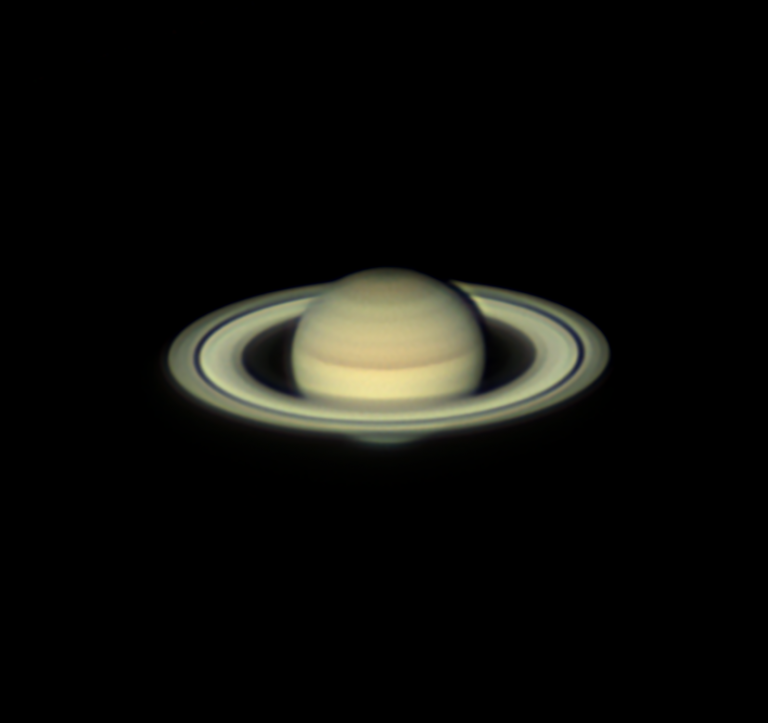
Last night I set out to image Jupiter and Saturn, but both are pretty far away at this point, and the atmospheric conditions weren’t great. So I tried for the Moon instead. We take our nearest celestial neighbor for granted – there’s a whole world right next to us, waiting for us to explore it!…
The Nebula with No Name
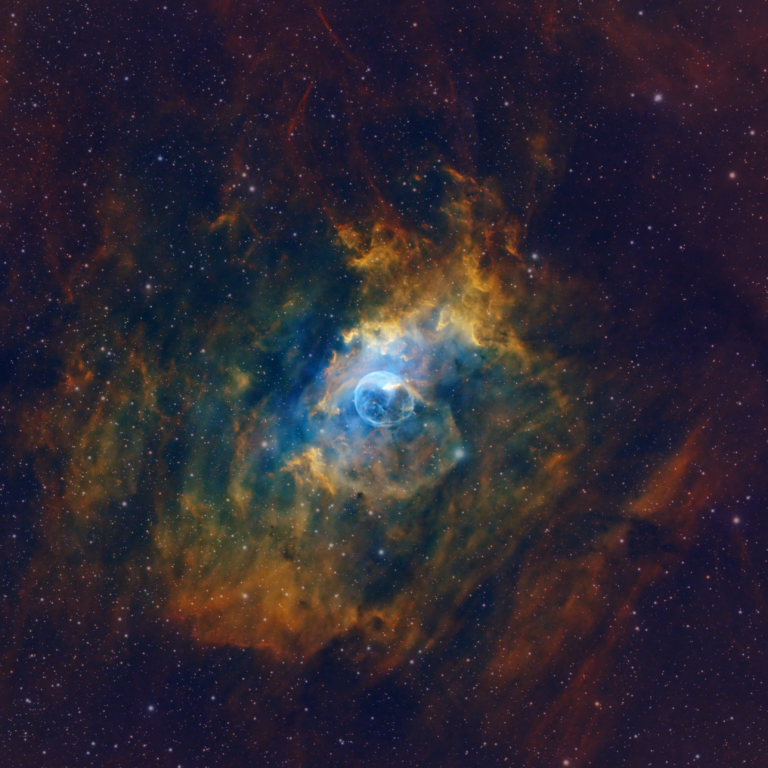
This dim nebula in the constellation Perseus has no name, apart from its catalog numbers NGC 1491 and LBN 704. I think it deserves one. It reminds me of the Bubble nebula – if you look closely, you’ll see a “bubble” at center being created from the stellar wind of the hot star that is…
The “Silver Sliver” Galaxy
Try saying that three times fast! Fortunately, the “Silver Sliver Galaxy” has a formal name that’s easier to pronounce: NGC 891. It’s about 30 million light-years away, and is thought to be very similar to what our own Milky Way galaxy would look like when viewed edge-on. Explore the wider-field image; click on it for…