Lunar Eclipse Jan 2019
A progression of photos taken at 15-minute intervals from 10:30 PM to 12:15 AM on the evening of Jan 20-21, 2019. Click to zoom in – there’s a lot of detail!
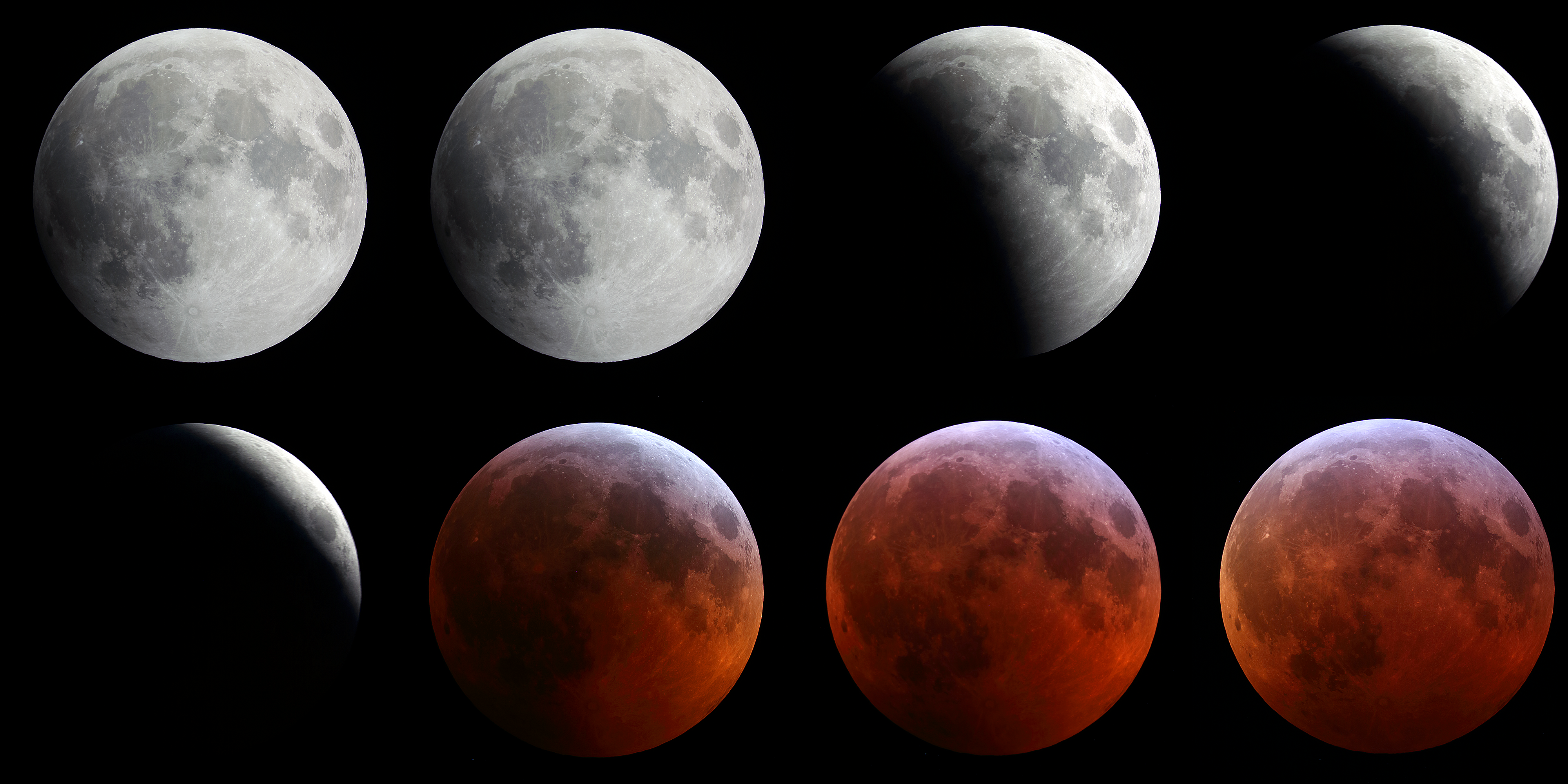
A progression of photos taken at 15-minute intervals from 10:30 PM to 12:15 AM on the evening of Jan 20-21, 2019. Click to zoom in – there’s a lot of detail!
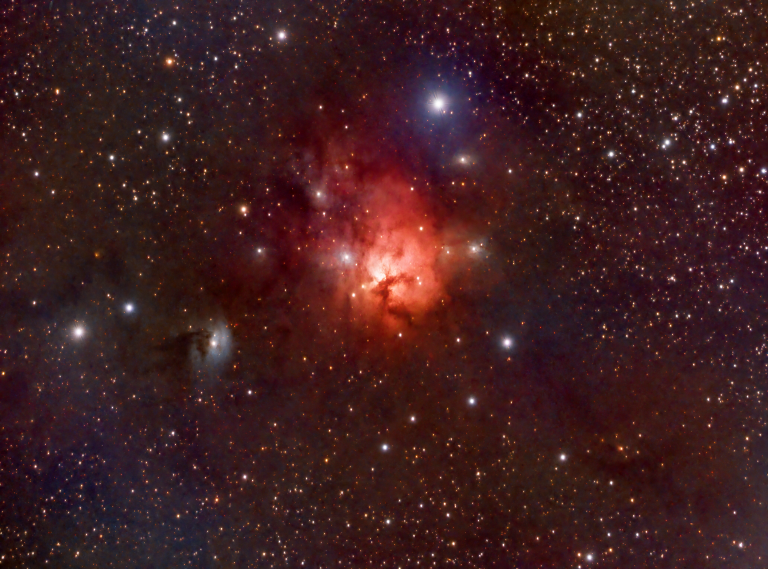
Formally NGC1570, the “Northern Trifid” is a combination of an emission nebula (the red parts, which is ionized Hydrogen emitting its own light) and a reflection nebula (the blue parts, which is starlight reflecting off dust.) You can also see hints of the dust surrounding this area, which is difficult to capture under the light-polluted…
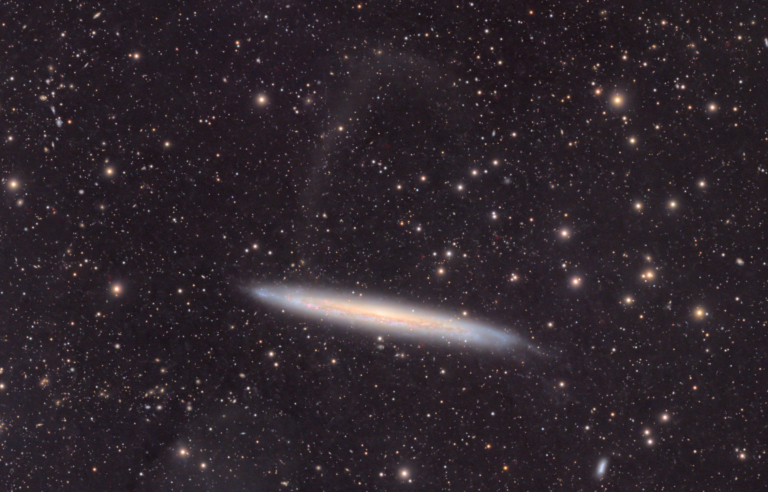
About 45-50 million light-years away, the Splinter Galaxy (AKA Knife Edge Galaxy or NGC 5907) caught my attention because it has a complex stream of stars surrounding it, resulting from a dwarf galaxy spiraling into it. That stream is very faint and wasn’t even known until 1998, but I managed to capture some of it…
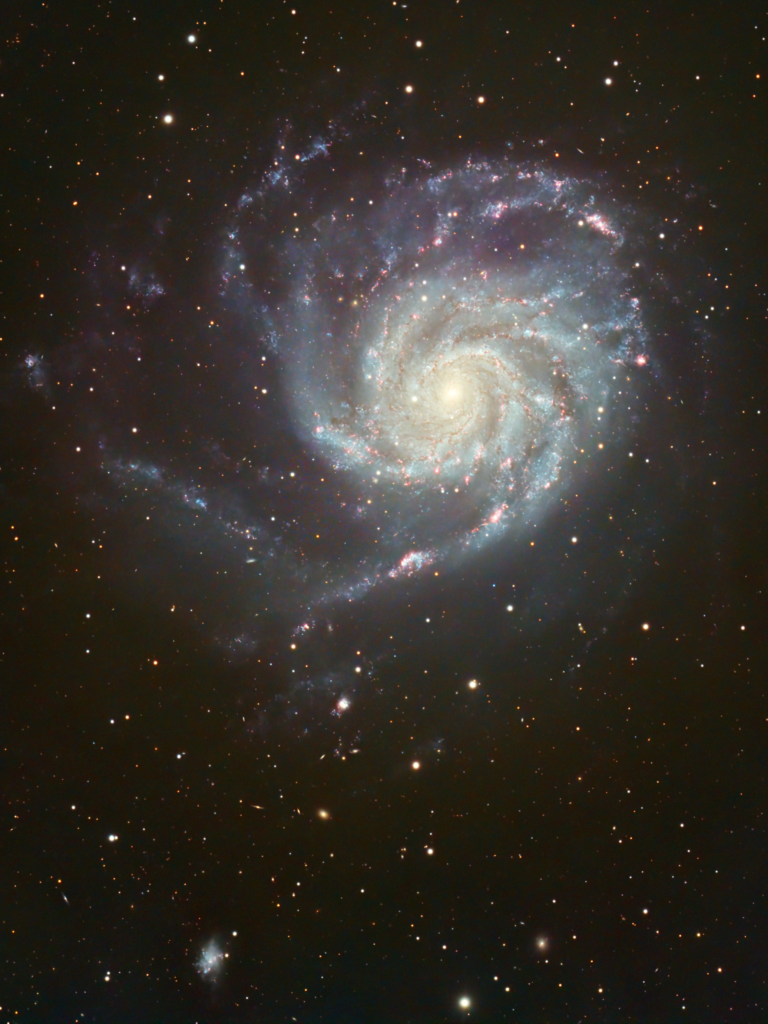
Somehow I’ve neglected to go back to one of the showcase galaxies of the spring sky with newer equipment and software: M101, the “Pinwheel Galaxy.” Located about 21 million light-years away within Ursa Major, this relatively close galaxy shows lots of active star-forming regions revealed by red HII gas. Those red spots are nebulae in…
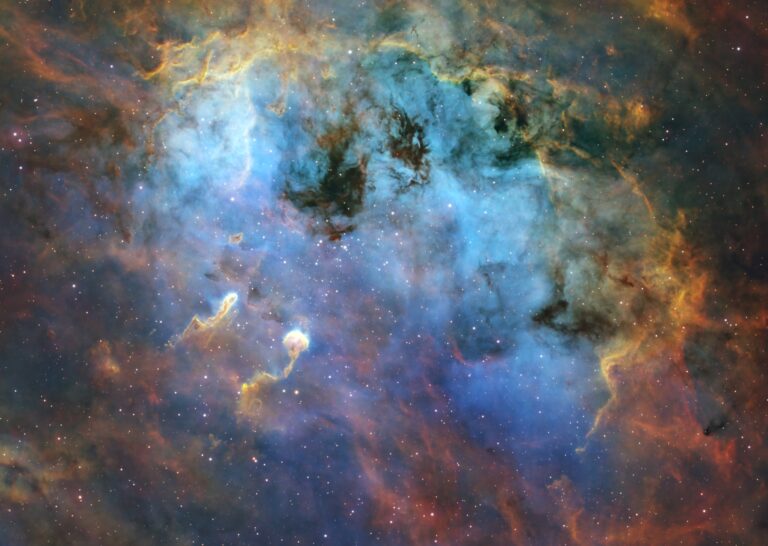
Commonly known as the “Tadpoles Nebula” for obvious reasons, this is somehow my first time imaging this one! Shot in narrowband / Hubble palette remotely from Starfront Observatories in Texas. Focusing in on the “Tadpoles” makes for a more interesting image, but here’s the wider field shot it was cropped from, which is also fun…
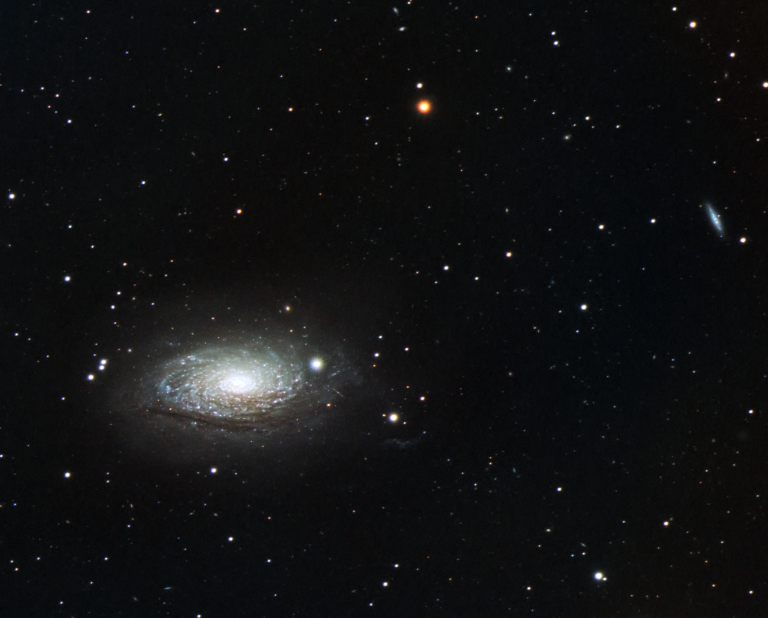
Last night I revisited M63, the Sunflower Galaxy. More formally M63, the Sunflower Galaxy is about 25 million light-years away. It’s about the same size as our Milky Way, but is classified as a “flocculent spiral” galaxy due to its poorly defined spiral arms. The more distant edge-on spiral galaxy on the right doesn’t show…
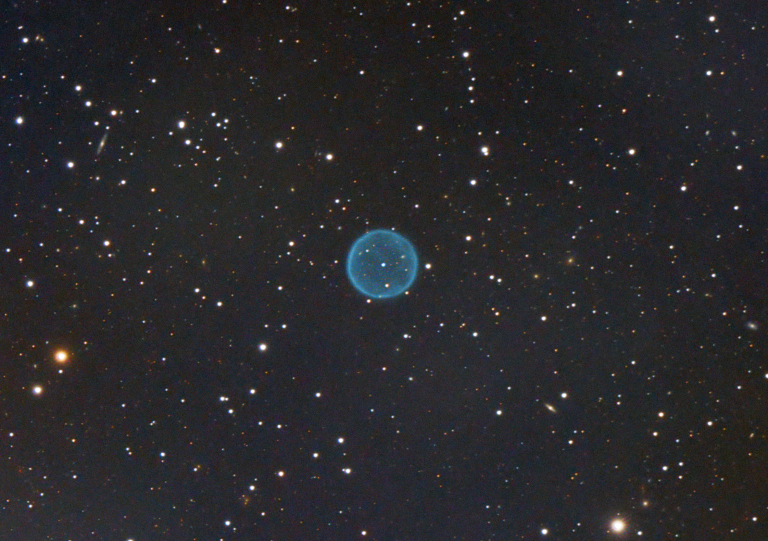
Well, it was certainly born of fire. This is planetary nebula Abell 39, one of the largest spheres in the galaxy… it’s 2.6 light-years across! It really is that color blue. You’re seeing ionized Oxygen gas blown off by the dying star in its center. Look closely for the distant galaxies in the background, including…