The Whirlpool Galaxy
The Whirlpool Galaxy (M51) appears to be sucking the life out of its companion, NGC 5195. While these galaxies are interacting, they’re not actually connected right now – it just looks that way.
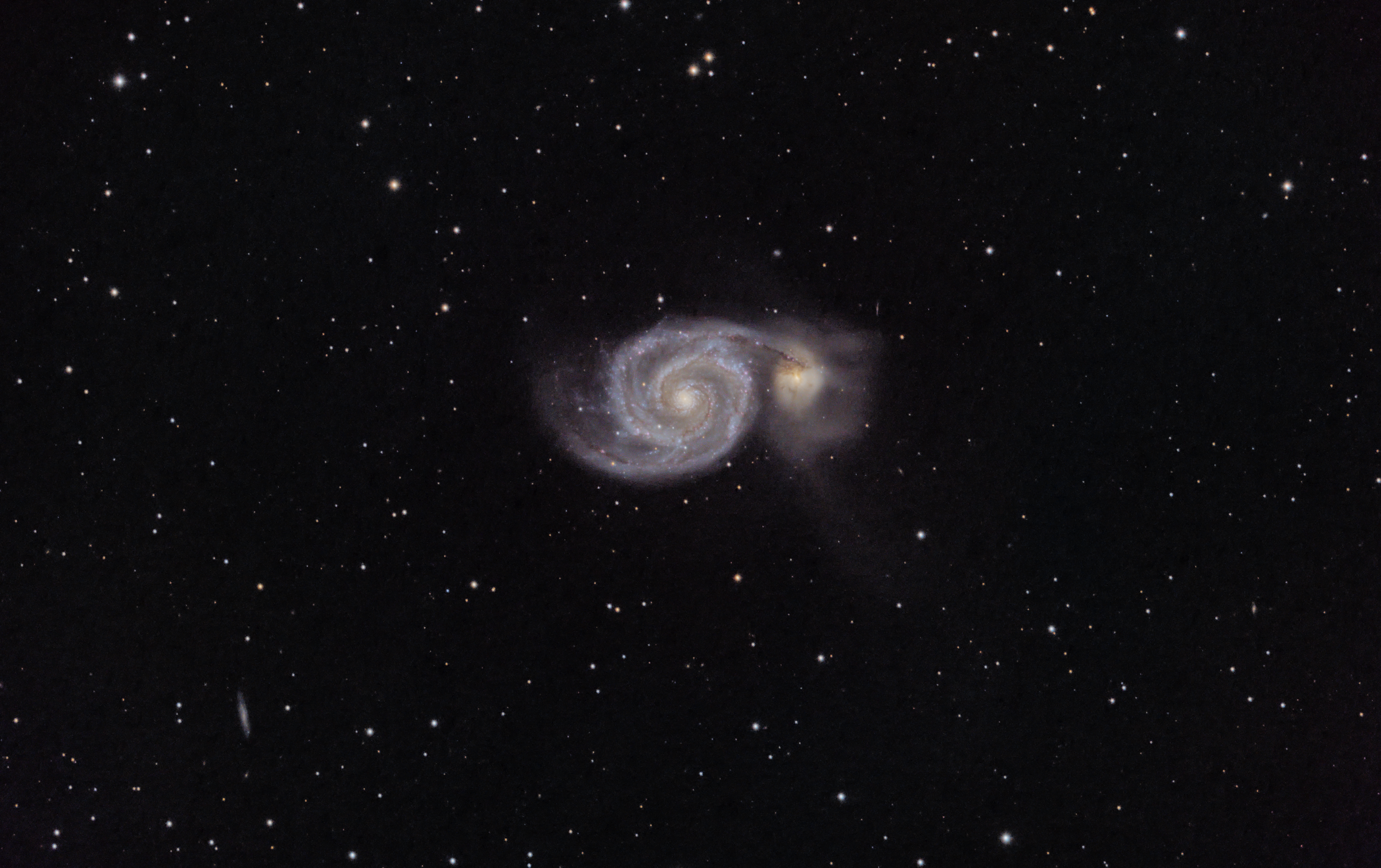
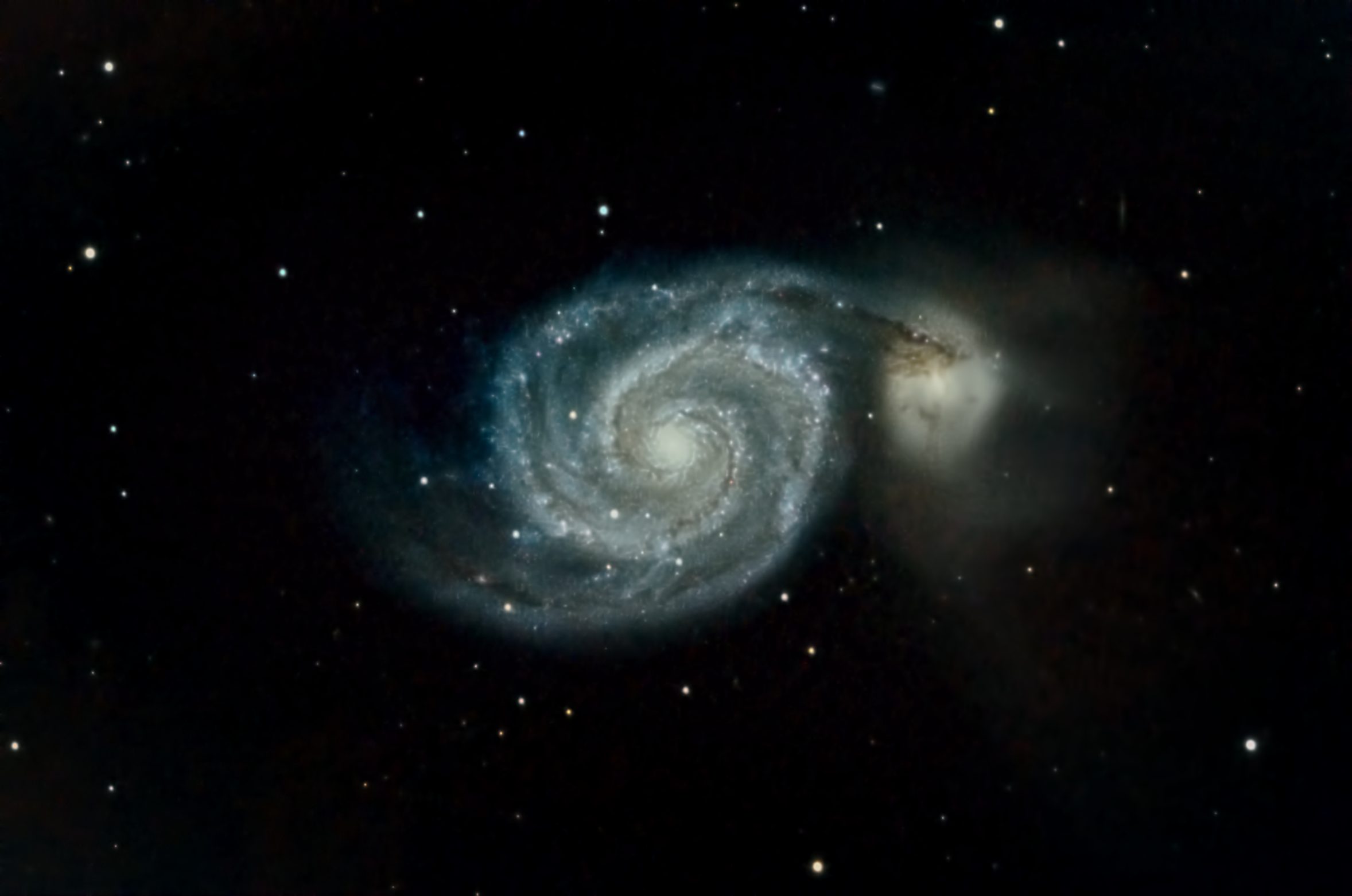
The Whirlpool Galaxy (M51) appears to be sucking the life out of its companion, NGC 5195. While these galaxies are interacting, they’re not actually connected right now – it just looks that way.
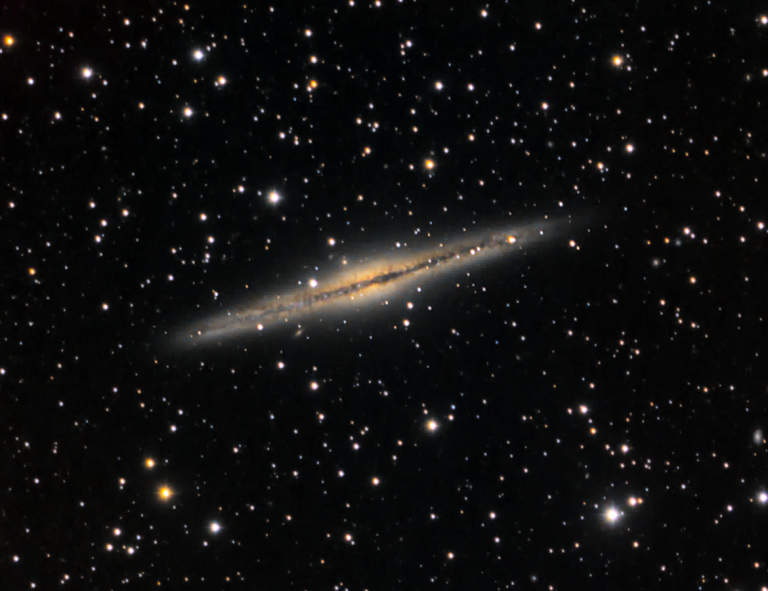
Try saying that three times fast! Fortunately, the “Silver Sliver Galaxy” has a formal name that’s easier to pronounce: NGC 891. It’s about 30 million light-years away, and is thought to be very similar to what our own Milky Way galaxy would look like when viewed edge-on. Explore the wider-field image; click on it for…
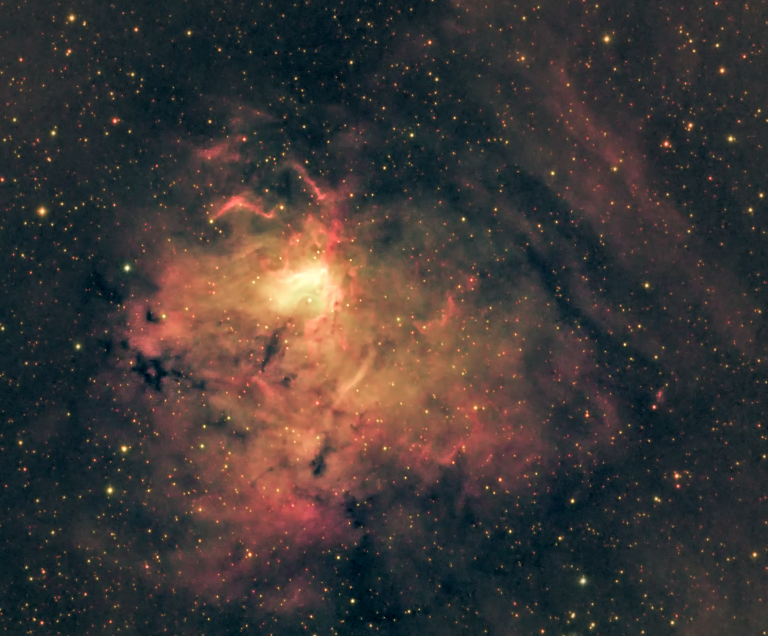
This dim nebula in the constellation Perseus has no name, apart from its catalog numbers NGC 1491 and LBN 704. I think it deserves one. It reminds me of the Bubble nebula – if you look closely, you’ll see a “bubble” at center being created from the stellar wind of the hot star that is…
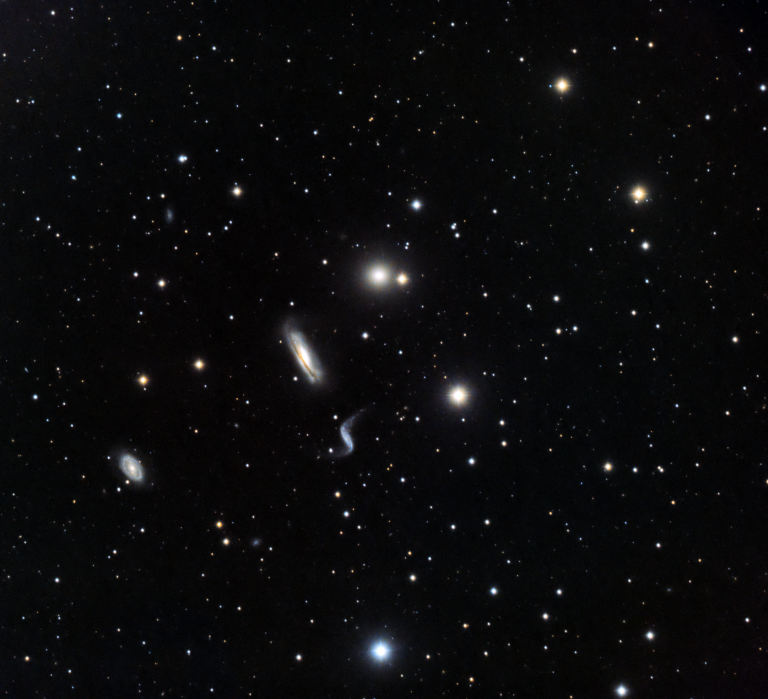
This is a weird little cluster of galaxies – there are four in all, and each one is completely different. There’s a weird, S-shaped one that must have been messed up by its neighbors in the past, a somewhat normal-looking spiral galaxy, and elliptical, and another one that’s viewed edge-on. Galaxies that have interacted with…
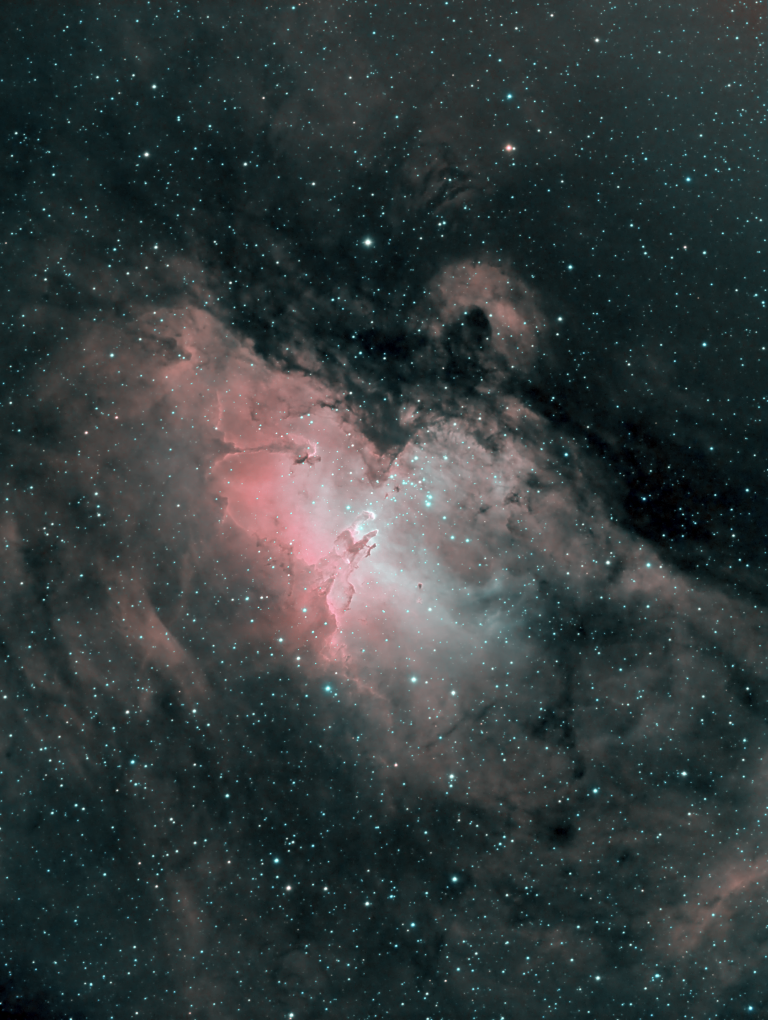
A wider shot of the Eagle Nebula, with the famous “pillars of creation” in its center.
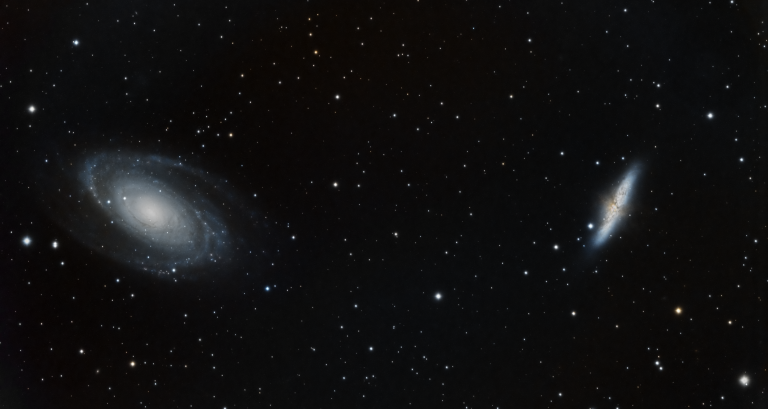
Johan Bode discovered both Bode’s Galaxy (M81, on the left) and the Cigar Galaxy (M82, on the right.) Look closely and you’ll see many other, more distant galaxies in the background as well.
Check out our online courses, and learn the secrets behind the images on this site! Select one to learn more. [lifterlms_courses]