Similar Posts
M14: A Golden Ball of Stars
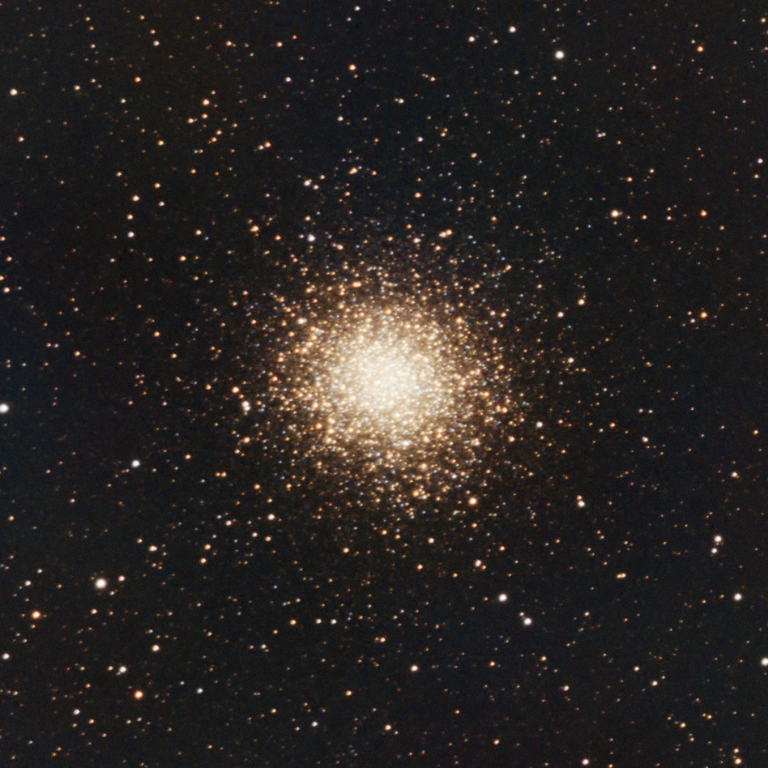
This morning, my cat woke me up at 3 AM, and I noticed it was clear outside. But, the sun would start rising in just a couple of hours, so doing some super-long-exposure shot of a faint nebula wasn’t in the cards. However, globular clusters don’t take long to image, as they are relatively bright…
Early-morning planetary imaging
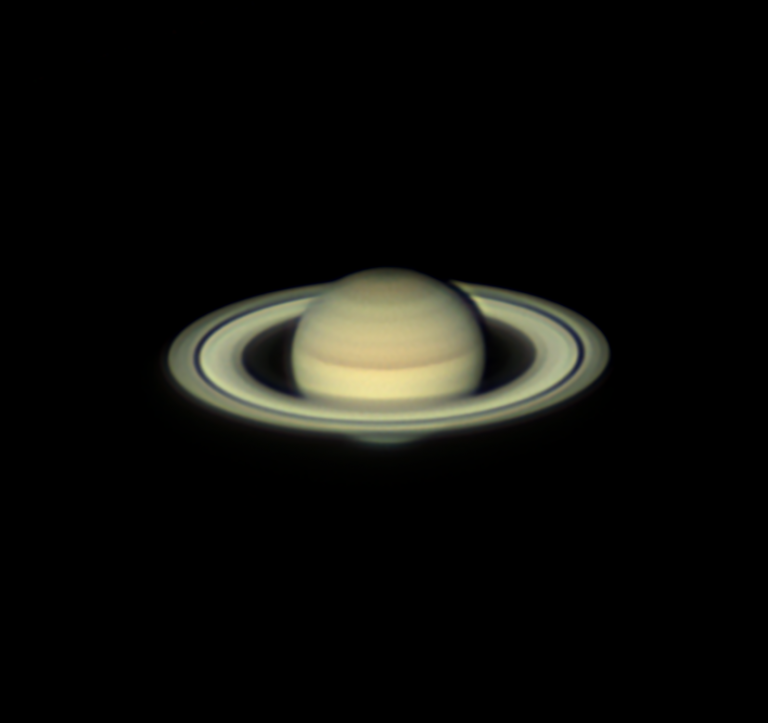
We recently obtained a new telescope for observing the planets, and we had our first good conditions for planetary imaging this morning! This is the best image of Jupiter I’ve ever gotten, and I’m hopeful that it will be even better once it gets closer to Earth in a couple of Months. Saturn’s not looking…
Thor’s Helmet
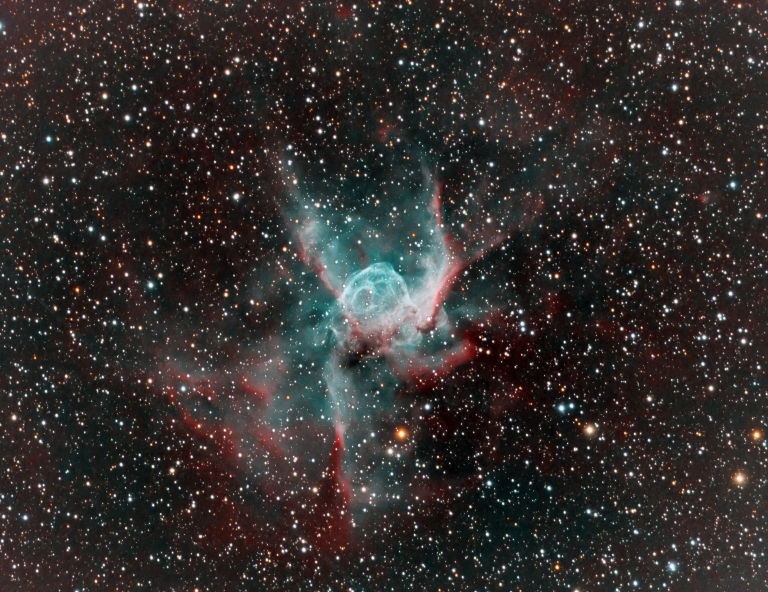
This week’s target was Thor’s Helmet (NGC 2359), an emission nebula in Canis Major a rather distant 12,000 light-years away. It’s formed by a Wolf-Rayet star in its center, which is a crazy-hot star whose immense stellar wind is bunching up and ionizing the gases around it in these complex patterns. It’ll probably go supernova…
The Eagle Nebula – sans stars
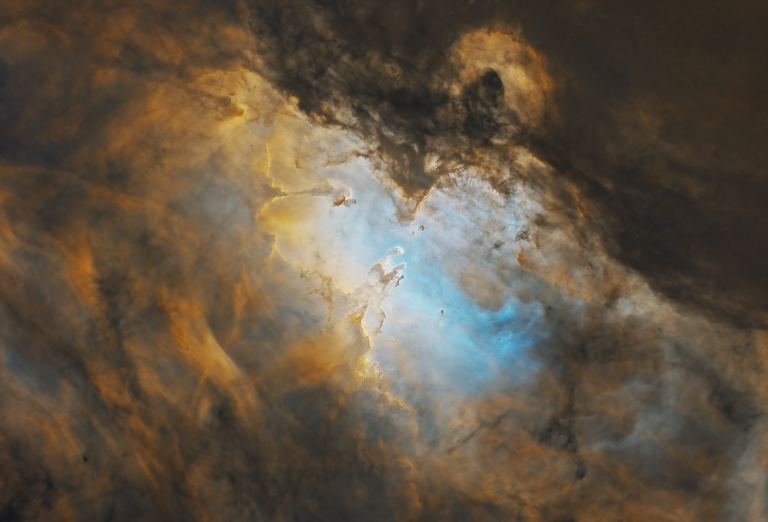
This image was something of a happy accident – I spent a night capturing narrowband data on M16, the Eagle Nebula (home of the famous “pillars of creation”.) Of course I had to try reproducing the iconic Hubble image as best I could, but the color palette they use results in big, ugly, magenta-colored stars….
NGC2403: An obscure galaxy in an obscure constellation.
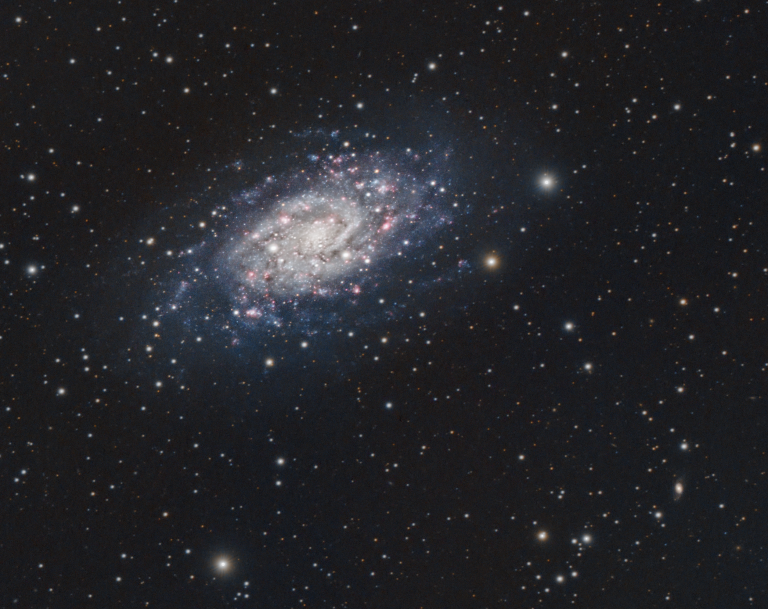
About 10 million light-years away within the constellation Camelopardalis lies NGC2403. It doesn’t get much love, but it was really an oversight in the famous Messier catalog that defines the most popular deep-sky objects. So let’s give it a little attention, and reflect on the fact that the light we’re seeing from this galaxy started…
The Spider Nebula
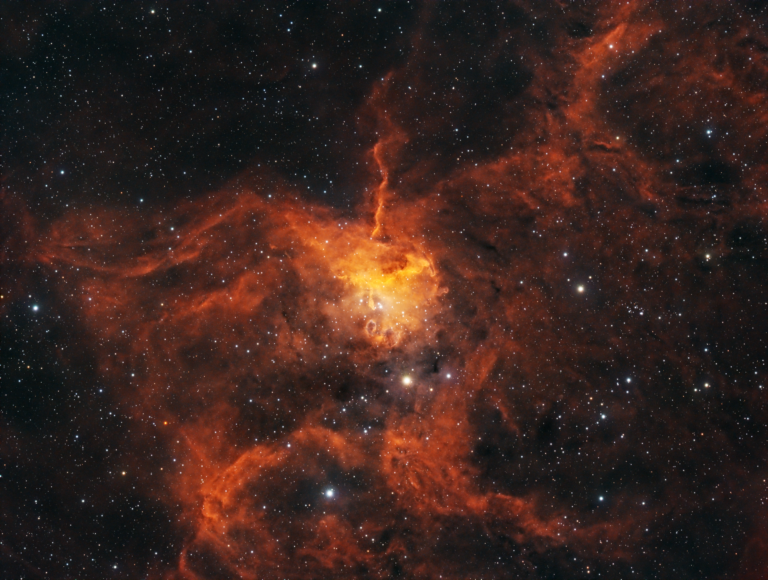
Here’s IC417, commonly known as the “Spider Nebula.” Just outside of the frame is a smaller one called the “Fly Nebula,” but my field of view isn’t quite big enough to capture them together! It’s about 10,000 light-years away, in the constellation Auriga. Imaged over 15 hours; narrowband nebula blended with RGB stars.