Learn Astrophotography with Frank!
Check out our online courses, and learn the secrets behind the images on this site! Select one to learn more.
[lifterlms_courses]

Check out our online courses, and learn the secrets behind the images on this site! Select one to learn more.
[lifterlms_courses]
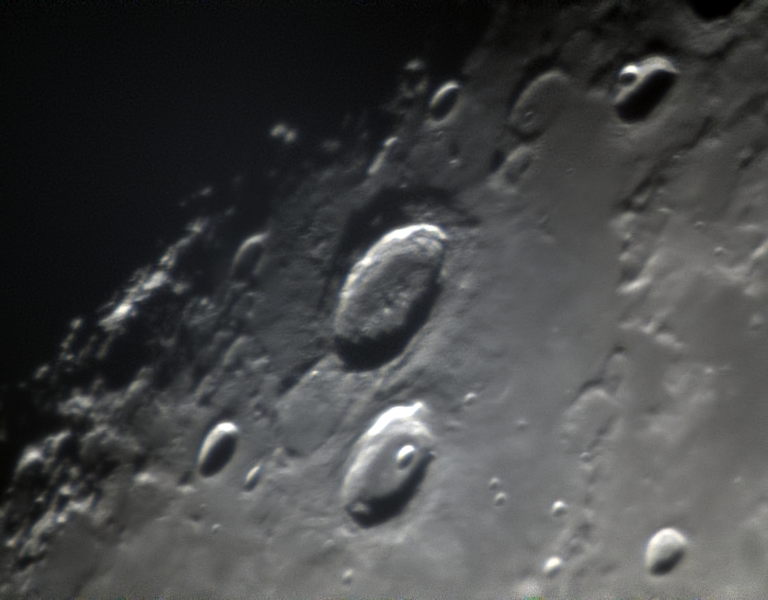
Imaging the planets requires completely different techniques and equipment than deep-sky stuff, and it’s something I’m not really good at yet. What matters the most is the seeing conditions – how stable the atmosphere is. A big part of taking good planetary images is just having the perseverance to get out there whenever the seeing…
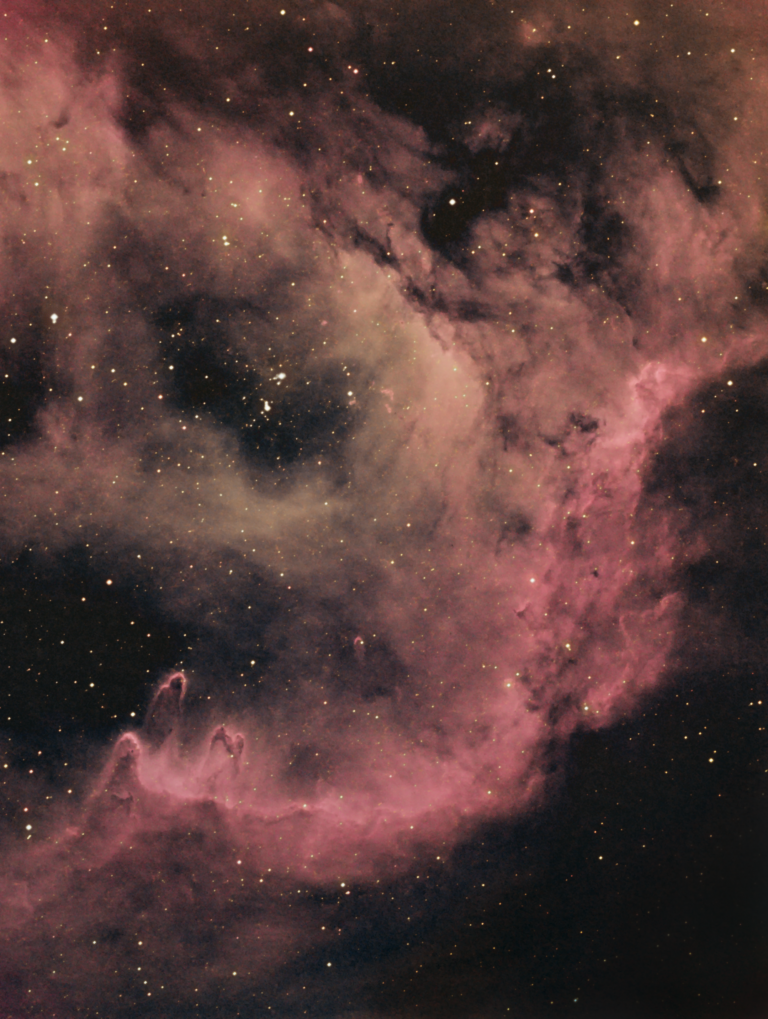
This is a small part of a larger nebula called the “Baby Nebula” (also known as the Soul Nebula) in the constellation Cassiopeia. If you see a baby in the larger nebula this is part of, this image would be of the baby’s bottom 🙂 There is a ton of star formation going on in…
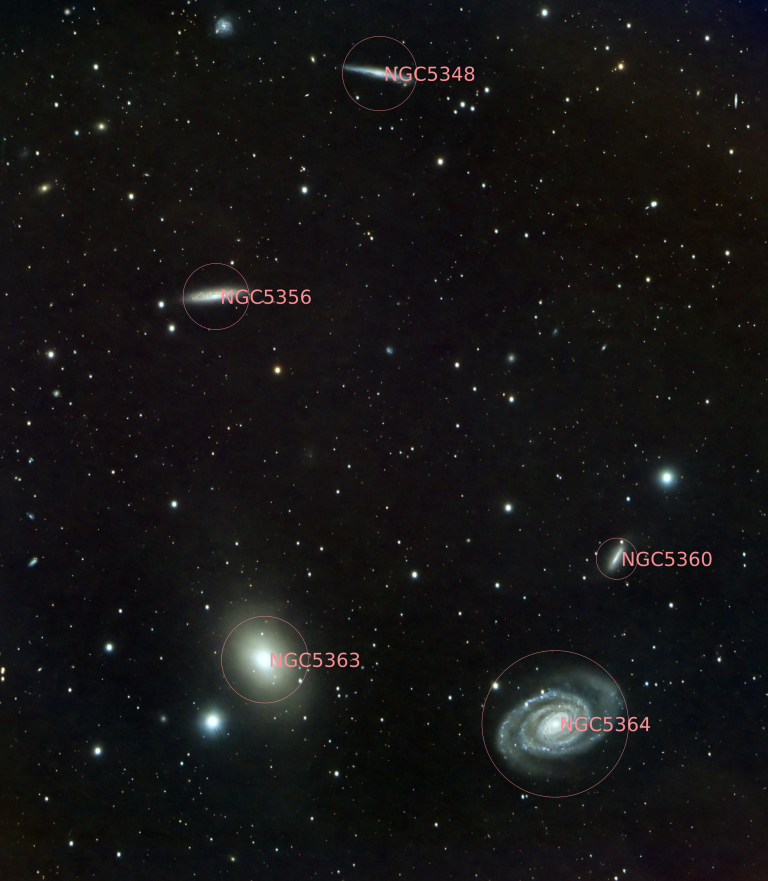
There’s a big cluster of galaxies within Virgo; it’s just filthy with them. People usually image a different part of it, but I found another interesting area that’s often overlooked. The grand-design spiral at the bottom is NGC5364; it’s about 55 million light-years away. The annotated image identifies its buddies.
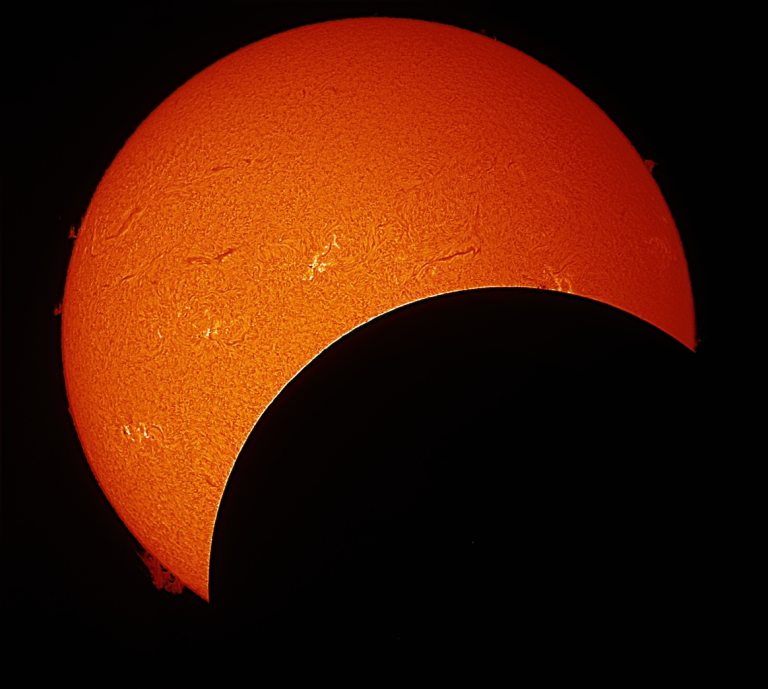
Central Florida wasn’t on the path of the “ring of fire” annular eclipse, but we did get about 60% coverage during the peak of our partial solar eclipse today! I was live-streaming the view at the peak, but managed to capture a quick image for myself shortly afterwards. Lots of good flares and prominences, and…
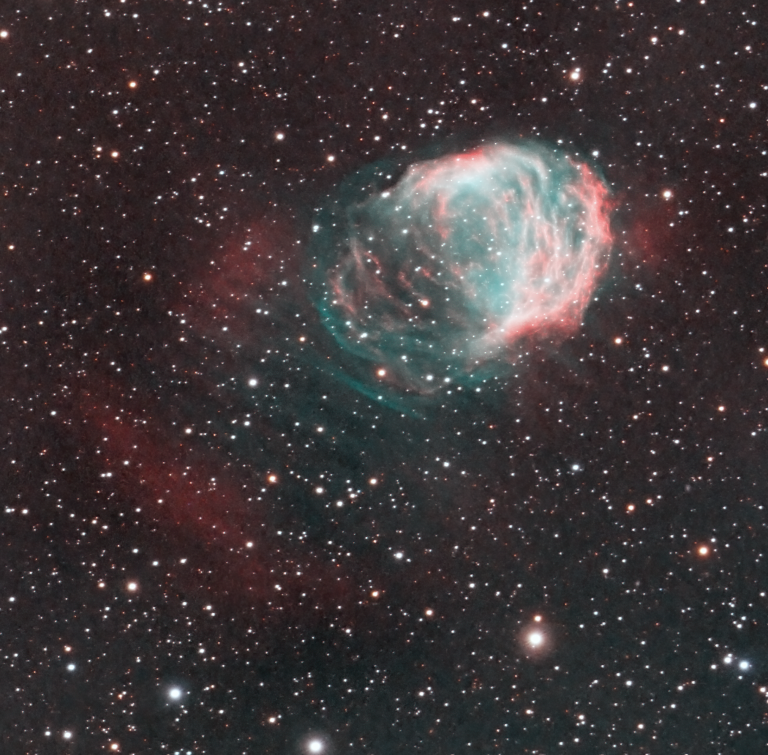
This is planetary nebula PK205+14.1, but its common name “The Medusa Nebula” rolls off the tongue a little better. About 1500 light-years away within the constellation Gemini, you’re seeing the gas blown off by a small star that ran out of fuel, and blew up into a red giant – later to end its life…
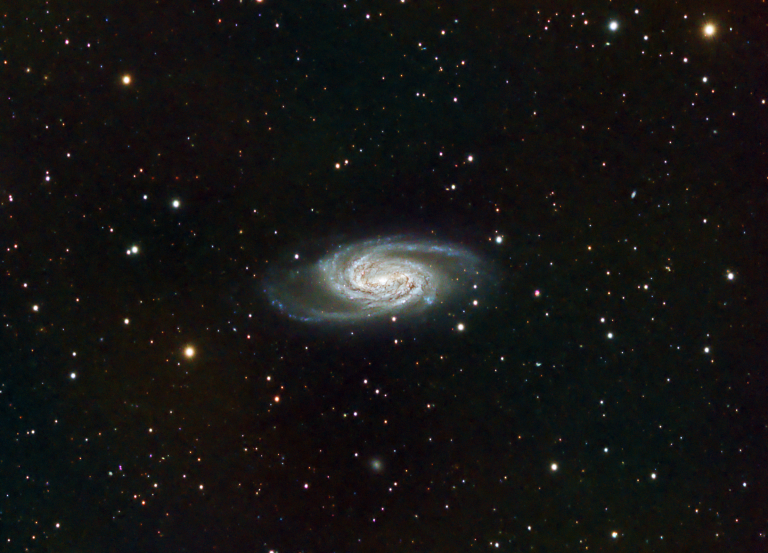
It’s a good thing galaxies don’t have feelings; they’re just collections of billions of stars. Because NGC 2903 would need therapy. It has no cute nickname like other galaxies; it’s just NGC 2903. And it has no galactic neighbors; most galaxies are gravitationally bound to other galaxies in their local group or cluster, but NGC…
Clicking on both the links on online courses (at https://boldly-going.com/2020/12/16/learn-astrophotography-with-frank/?mc_cid=e5ec7b030e&mc_eid=d2939fb3f3) is giving error. It seems briefly it comes on and then shows the error. I am an enthusiast for astro photography.
Thanks for letting me know! I think this is cleared up now.