Markarian’s Chain
This is actually only a portion of a string of galaxies that make up the Virgo supercluster of galaxies, around 50-60 million light-years away.
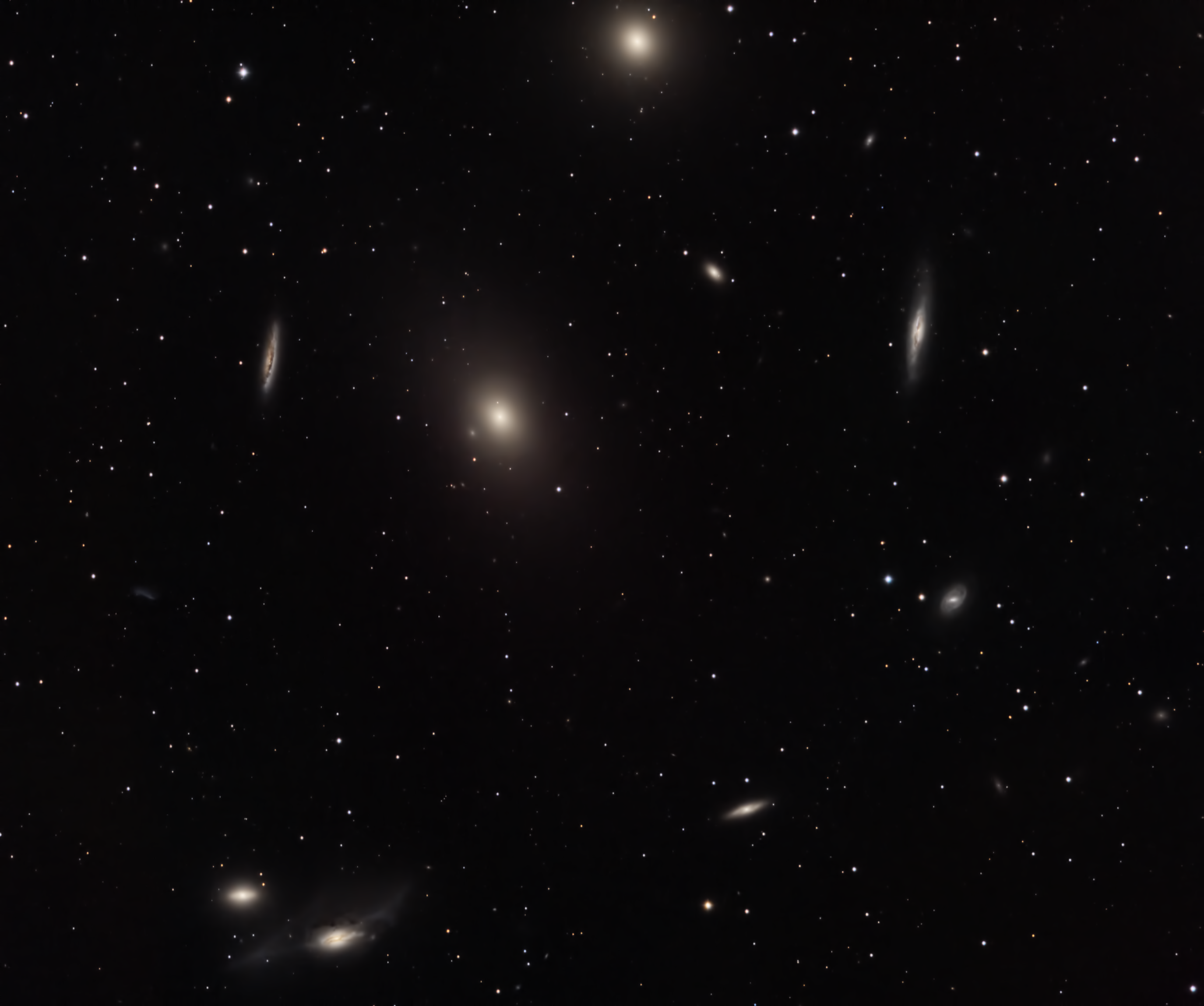
This is actually only a portion of a string of galaxies that make up the Virgo supercluster of galaxies, around 50-60 million light-years away.
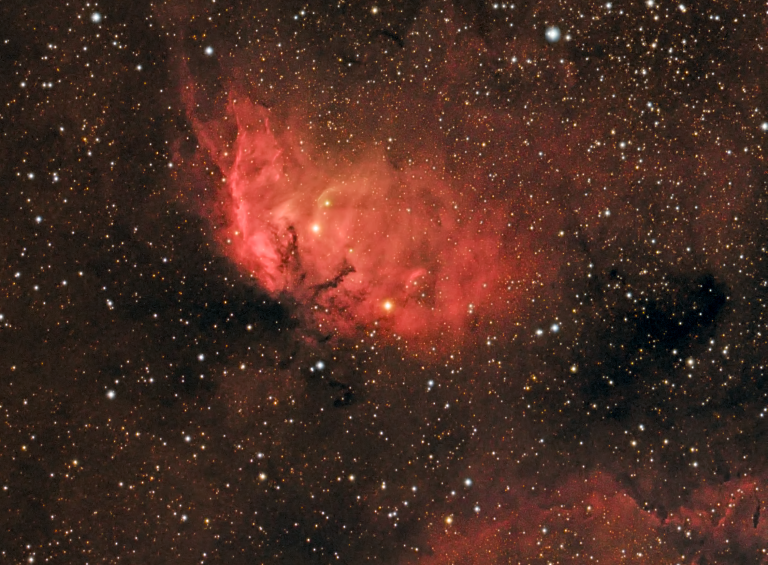
In these short summer nights, I want to take advantage of every moment of darkness. Right now, the galaxy M100 is up in the hours before midnight, and the “Tulip Nebula” – formally SH2-101 – rises just as M100 sets. So for this past week, I’ve been imaging both objects. But no more clear skies…
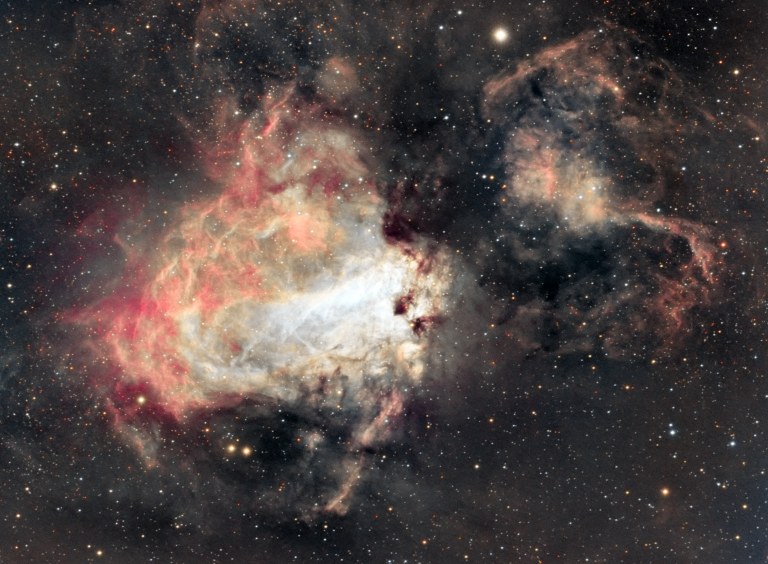
This is M17, the “Swan Nebula”. Everyone seems to see something different in it! To me the whole thing looks like a swan seen from the side, but my family sees different birds within it. It’s like seeing shapes in clouds, which makes sense, as this is just a really, really big cloud of gas…
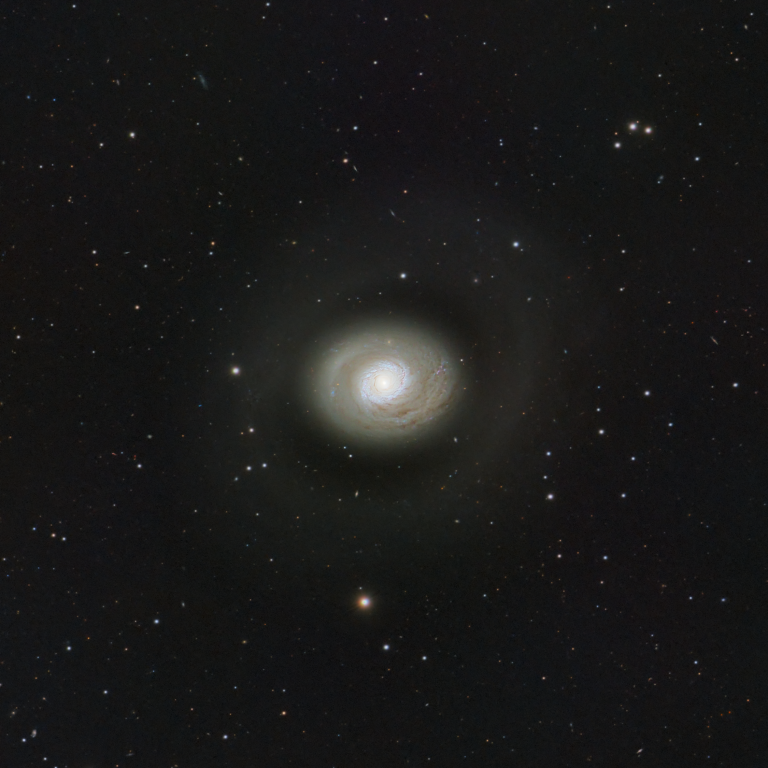
Sometimes called the “Cat’s Eye Galaxy,” this is M94 – about 16 million light years away in the constellation Canes Venatici. You can barely see its faint outer ring surrounding it here, as well as several very distant background galaxies. It’s notable for challenging our understanding of the universe – it appears to have very…
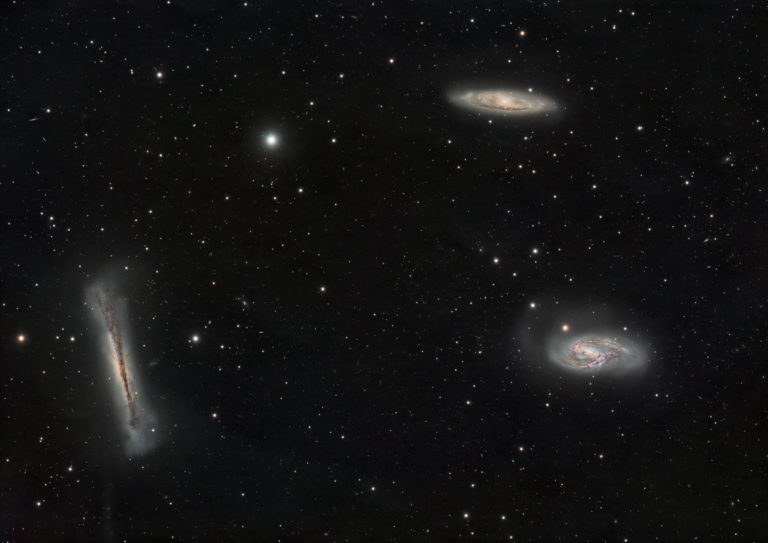
It’s been awhile since I imaged the “Leo Trio” (aka Leo Triplet) of galaxies: M65, M66, and NGC 3628. I wanted to see if my latest equipment, software, and somewhat darker skies made a difference. I’d say so… this is a total of 25 hours of exposure time, including some Hydrogen-alpha filter data to pull…
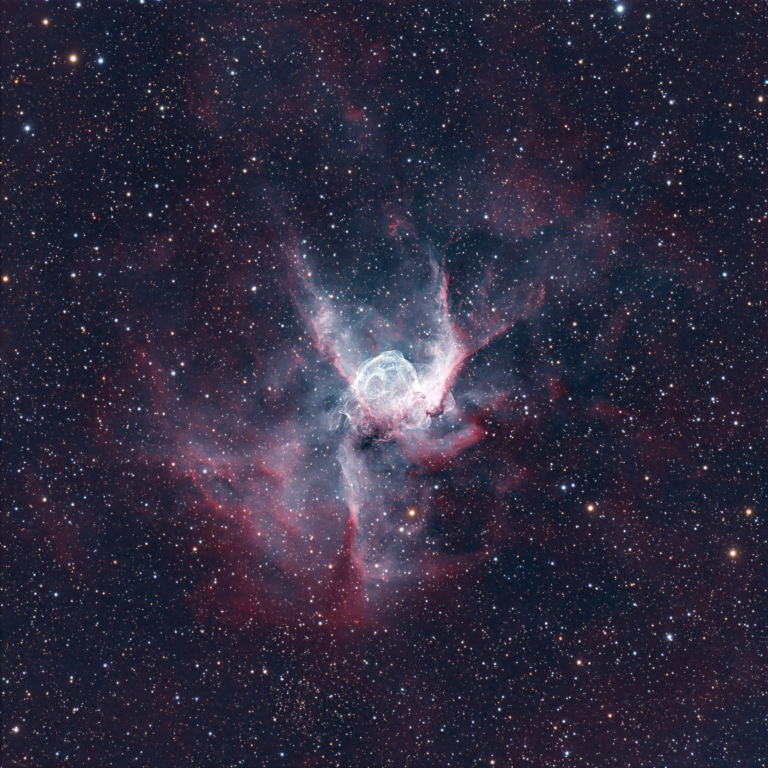
Domey McDomeFace’s days are numbered, I’m afraid! Our property is up for sale, and hopefully its new owner will continue to use it to produce amazing images of their own. Meanwhile, I’m taking advantage of every clear night I can, while we’re still here. Here’s one of my favorite objects: “Thor’s Helmet” or NGC2359. Like…
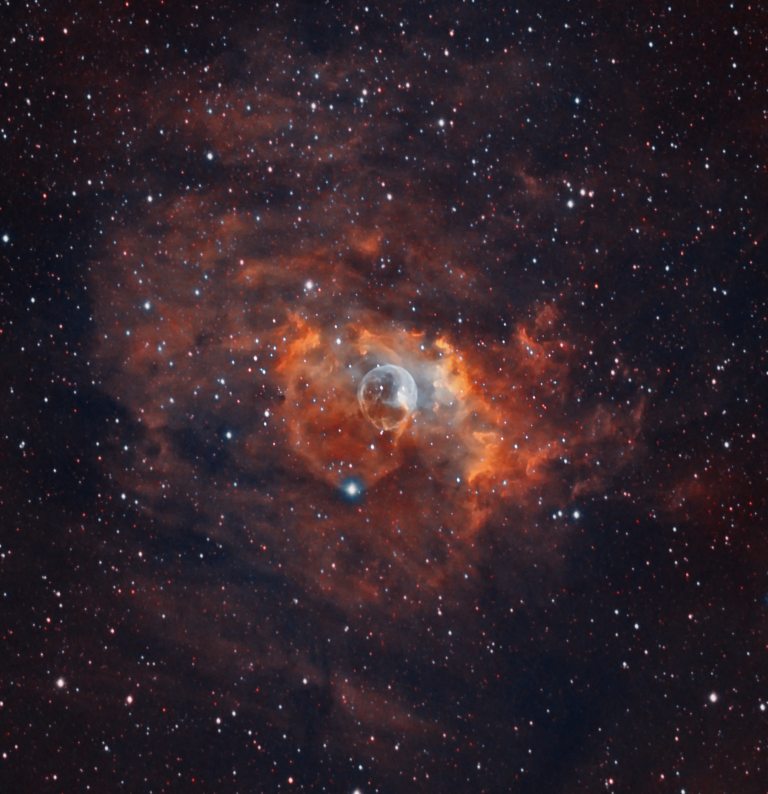
Here’s my latest image of the “Bubble Nebula”, one of my favorite objects in our galaxy. That blue “bubble” is a shell of gas pushed out by the stellar wind of the bright star just right of its center. It’s a big star, 10-20 times larger than our sun. Its radiation is also illuminating and…